ARM architecture AI embedded controllers not only elevates the automation and intelligence of flower seedling cultivation but also infuses modern horticulture with innovative technological vitality.
Case Details
In modern horticulture and facility agriculture, flower seedling cultivation is highly dependent on environmental conditions. Even minor fluctuations in temperature and humidity can significantly impact seed germination rates, growth speed, and disease resistance. Traditional manual adjustment methods are not only inefficient but also struggle to achieve precise control. With the advancement of embedded AI technology, AI controllers based on ARM architecture offer an intelligent and automated solution for managing flower seedling environments.
System Architecture Design
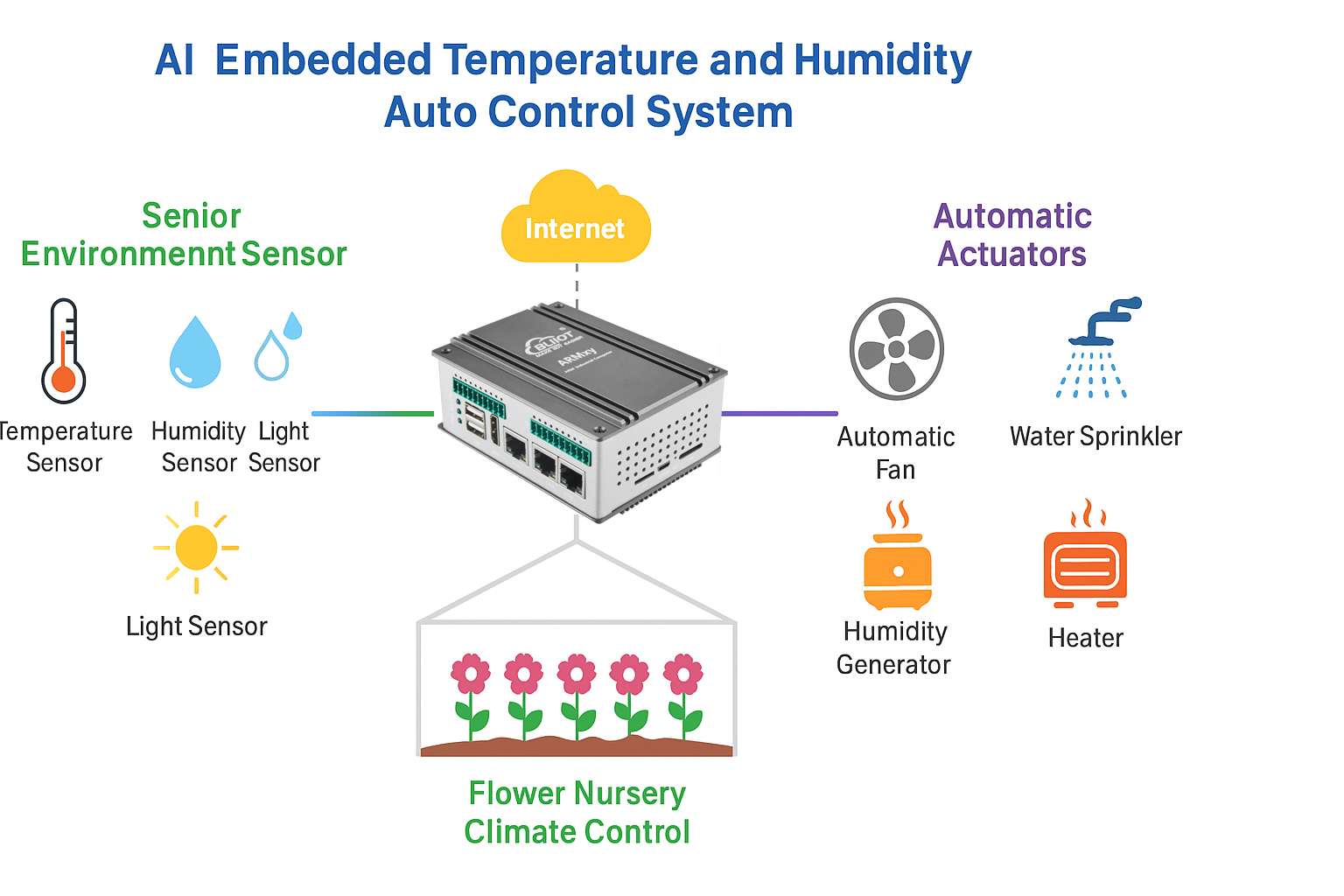
Control Core: ARM Embedded AI Controller
The system employs ARM Embedded AI Controller BL440 series processors, which feature low power consumption and high performance, making them ideal for greenhouse environments. The controller runs a lightweight Linux or RTOS system, supporting AI model inference and edge computing to ensure real-time responses and intelligent decision-making.
Sensor Network
The system integrates multiple environmental sensors, including:
- Temperature Sensor (e.g., SHT31): Real-time monitoring of air temperature
- Humidity Sensor (e.g., DHT22): Detection of air humidity variations
- Light Sensor: Auxiliary assessment of evaporation intensity and photosynthesis needs
- Soil Moisture Sensor: Evaluation of root zone water status, linked to the irrigation system
Actuator Module
Based on sensor data, the controller automatically drives the following devices:
- Fans and Heaters: Regulation of air temperature
- Humidifiers and Ventilation Windows: Adjustment of air humidity
- Irrigation Solenoid Valves: Control of soil moisture
- Motor Drivers: Operation of auxiliary equipment such as shading screens and curtains
Communication and Remote Management
The system supports multiple communication protocols (Wi-Fi, RS485, CAN, LoRa), enabling integration with cloud platforms for remote monitoring, data analysis, and policy deployment. Users can access real-time seedling environment status via mobile apps or computers and adjust control parameters as needed.
AI Intelligent Control Logic
Data Acquisition and Modeling
The controller periodically collects environmental data, applying filtering and outlier removal. A lightweight neural network model, trained on historical data, predicts temperature and humidity trends, enabling proactive adjustment decisions.
Dynamic Adjustment Strategies
The system sets target temperature and humidity ranges (e.g., 20–25°C, 60–70% RH). The AI model dynamically adjusts actuator states based on current conditions and predictions. Fuzzy control or PID algorithms are incorporated to enhance regulation precision and response speed.
Crop Adaptability
The system supports parameter templates for various flower types (e.g., roses, tulips, phalaenopsis), allowing users to load stage-specific control strategies for personalized management.
System Advantages
Intelligent Prediction: AI models anticipate environmental changes, preventing delayed adjustments
High Reliability: Stable operation on ARM architecture, adaptable to complex industrial environments
Remote Operations: Cloud-based monitoring and policy updates reduce labor costs
Crop Adaptability: Extensible for diverse flower seedling needs, enhancing system versatility
Application Scenario Expansion
- Urban intelligent greenhouses
- Flower seedling bases
- Vertical farming modules
- Research laboratory plant incubators
Conclusion
The integration of ARM architecture AI embedded controllers not only elevates the automation and intelligence of flower seedling cultivation but also infuses modern horticulture with innovative technological vitality. In the future, as AI models continue to optimize and sensor technologies advance, this system will play a pivotal role in broader agricultural applications, driving a new era of green, efficient, and precise plant breeding.


