With the development of industrial automation (Industry 4.0), PLC and PAC are no longer simply substitutes, but coexist complementary to meet needs of different complexity.
Case Details
Introduction
Amidst the rapid development of industrial automation, the core "brain" of control systems is continuously evolving. Alongside the well-known Programmable Logic Controller (PLC), the Programmable Automation Controller (PAC) is increasingly emerging as a key player in complex application scenarios. So, what exactly is a PAC? Where does its "strength" lie compared to the traditional PLC? This article will delve into the differences between the two, helping you make more informed decisions during project selection.
PAC: The Power-Fusion Programmable Automation Controller
PAC, short for Programmable Automation Controller, represents a significant trend in the industrial control field. It doesn't entirely replace the PLC but skillfully merges the core strengths of traditional PLCs (high reliability, strong real-time performance) with the powerful capabilities of industrial computers.
The core value of the PAC lies in its functional superiority:
-
Beyond Basic Control: It not only performs fundamental logic control (e.g., driving motors, starting/stopping equipment) but also excels at data acquisition, high-performance computing, execution of complex algorithms, and coordinated multi-tasking management.
-
Beyond Programming Limits: While PACs also support the five industrial programming languages defined by the IEC 61131-3 standard (Ladder Diagram LAD, Function Block Diagram FBD, Structured Text ST, etc.), their key highlight is support for high-level programming languages (such as C, C++, Python). This empowers engineers to easily implement complex algorithm optimization, data analysis modeling, and other functions difficult to achieve with traditional PLCs.
PAC vs. PLC: Core Differences
Understanding the "strength" of the PAC requires a multi-dimensional comparison with the PLC:
-
Processing Power:
-
PAC: Equipped with higher-performance processors and larger memory, it excels at handling complex decision-making, real-time demanding calculations (e.g., PID loop tuning, motion control algorithms), and massive data analysis tasks. Its processing power is closer to that of an industrial PC.
-
PLC: Designed with a core focus on deterministic real-time response, it is particularly well-suited for fast-paced, relatively simple discrete control tasks (e.g., production line cycle control, equipment interlock protection). Its processing power primarily serves basic logic control needs.
-
Programming Capabilities:
-
PAC: Fully compatible with IEC 61131-3 languages and additionally supports high-level languages like C/C++/Python. This provides a powerful and flexible programming environment for developing complex control strategies, optimizing algorithms, connecting to advanced databases, or implementing customized functions.
-
PLC: Primarily relies on IEC 61131-3 standard industrial languages (especially Ladder Diagram). Its programming paradigm focuses more on clear, intuitive logic flow expression and struggles with highly complex algorithms or extensive data processing.
-
Communication & Integration:
-
PAC: Features robust networking capabilities and broad protocol support (e.g., Ethernet/IP, OPC UA, Modbus TCP, MQTT, PROFINET). It can seamlessly integrate various field devices, IoT sensors, database systems (SQL/NoSQL), and cloud platforms, making it an ideal central hub for building modern connected factories (IIoT).
-
PLC: Communication capabilities are relatively limited and more traditional, typically focused on standard protocols within the industrial control domain (e.g., Modbus RTU, PROFIBUS, DeviceNet). It faces challenges in scenarios requiring deep integration with numerous heterogeneous IT systems or the cloud.
-
Functional Scalability & Architecture:
-
PAC: Employs a highly modular design, facilitating the construction and expansion of complex large-scale or distributed control systems. It can effectively manage multiple remote I/O stations or subsystems, enabling synchronized coordinated control across different areas.
-
PLC: Scalability is typically constrained to smaller-scale or local systems. While modular PLCs exist, their architecture and capabilities are generally less flexible and powerful than PACs for managing large distributed networks or executing complex cross-system collaborative tasks.
Where PAC Excels: Key Application Scenarios
Based on these differences, PACs demonstrate significant advantages in the following complex and demanding applications:
-
Complex Process Control: Process industries like chemical plants, power generation facilities, and pharmaceutical plants involving multi-variable, strongly coupled systems requiring advanced algorithms (e.g., Model Predictive Control MPC) and real-time data processing.
-
Data-Intensive Applications: Scenarios requiring real-time acquisition, storage, analysis, and modeling of large volumes of equipment operational data (e.g., predictive maintenance, energy efficiency optimization, quality analysis). PAC's large memory and strong processing power are crucial here.
-
Advanced Motion & Multi-Task Coordination: Applications needing precise synchronous control of multiple axes (e.g., complex robotics, high-end CNC machines) or simultaneous management of numerous parallel tasks (e.g., vision inspection + motion control + data logging).
-
Future-Oriented Smart Factories (Industry 4.0/IIoT): Projects requiring deep convergence of OT (Operational Technology) and IT (Information Technology) to achieve device connectivity to the cloud, big data analytics, remote monitoring, and advanced application integration.
PLC Remains Irreplaceable: An Economical and Reliable Choice
It's crucial to emphasize that the "strength" of the PAC does not mean it can completely replace the PLC.
-
In scenarios characterized by clear logic, high repetition, extremely strict real-time requirements, but relatively simple calculations (e.g., automotive assembly lines, packaging machinery, simple material handling systems), PLCs, with their exceptional stability, long-proven reliability, lower acquisition and maintenance costs, and faster scan cycles (determinism), remain the more economical and practical choice.
How to Choose: PAC or PLC?
The core of selection lies in precisely matching the application requirements:
-
Choose PLC: When your application primarily involves discrete logic control, tasks are relatively straightforward, system scale is small, budget is limited, and fundamental reliability and real-time performance are paramount, PLC is a mature, reliable, and cost-effective solution.
-
Choose PAC: When your application involves complex calculations, advanced algorithms, extensive data processing and analysis, real-time monitoring and optimization, multi-device/multi-subsystem collaboration, deep integration with IT systems/cloud platforms, or anticipates significant future functional expansion, the powerful processing capabilities, programming flexibility, superior communication/integration, and scalability offered by PACs deliver greater long-term value and efficiency gains.
Modern PAC solutions often leverage open architectures and specialized hardware platforms. A prime example is the ARMxy BL410 industrial controller, equipped with OPENPLC for IEC 61131-3 compliant programming. When combined with BLIoTLink for robust industrial IoT connectivity, BLRAT for secure remote access and management, and QuickConfig for rapid deployment, the ARMxy BL410 transforms into a powerful, integrated industrial PAC platform. This combination delivers the essential PAC strengths outlined previously: high-performance processing for complex tasks, flexible programming (supporting both IEC languages and potential high-level extensions), seamless communication across diverse protocols and cloud platforms via BLIoTLink, and enterprise-grade remote manageability through BLRAT. Such integrated platforms demonstrate the practical implementation of modern PAC concepts, making them highly suitable for demanding industrial automation and IIoT applications where connectivity, data processing, security, and scalability are paramount."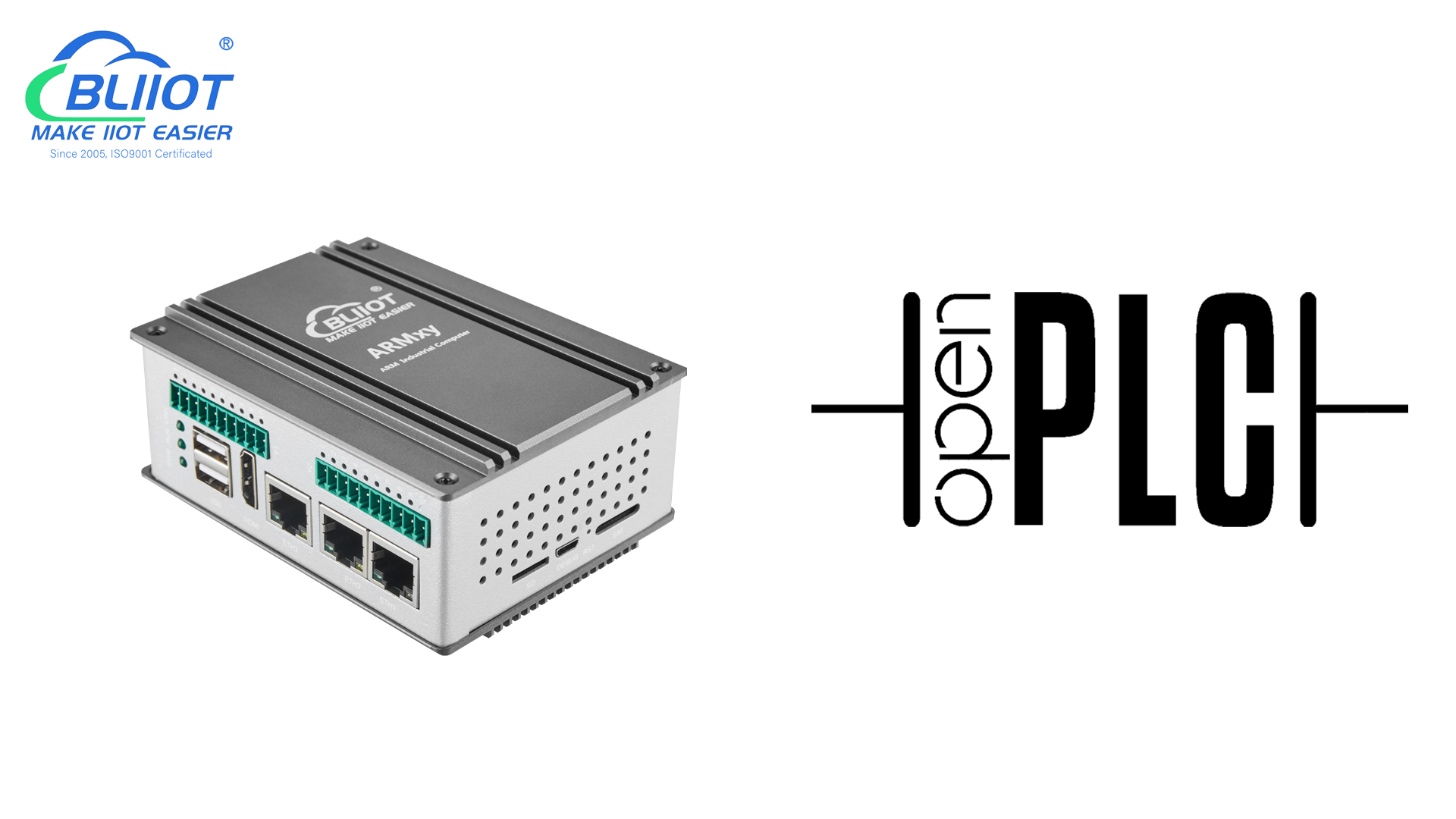
Conclusion: Complementary Evolution, Selection by Need
The PAC represents a significant evolution in the functionality, performance, and integration capabilities of industrial controllers, providing a powerful tool to meet increasingly complex industrial automation challenges. However, the PLC, with its solid foundation and cost advantages in the realm of simple, high-speed, highly reliable control, still firmly secures its place in a vast market segment.
As industrial automation advances towards an intelligent, networked, data-driven future (Industry 4.0), PLCs and PACs do not have a simple replacement relationship; instead, they coexist complementarily, serving needs at different levels of complexity. Engineers and decision-makers should deeply understand the technical characteristics and applicable scenarios of both technologies. Making the most reasonable and forward-looking choice requires aligning with specific project goals, functional requirements, performance demands, budget constraints, and future development plans. Only then can the efficiency of control systems be maximized, driving continuous improvement in production efficiency and intelligent capabilities.


