Selecting the ideal ARM-based AI edge controller demands a holistic assessment of application needs, compute capabilities, interface compatibility, security, and reliability.
Case Details
With the rapid advancement of the Industrial Internet and smart manufacturing, edge computing has emerged as a pivotal technology driving industry transformation. In industrial applications, leveraging AI (Artificial Intelligence) for data processing, intelligent decision-making, and automated control has become essential for boosting production efficiency and reducing operational costs. Against this backdrop, selecting an appropriate ARM-based AI edge controller is crucial. This article explores key considerations for choosing the right ARM-based AI edge controller to address diverse industrial requirements.
Understanding the Advantages of ARM-Based AI Edge Controllers
The ARM architecture has become the dominant processor platform in embedded systems and industrial automation due to its efficiency, low power consumption, and scalability. Compared to traditional x86 architectures, ARM offers optimized performance, particularly in edge computing environments. Its lower power draw and compact size enable robust computing capabilities even in resource-constrained settings.
Moreover, ARM-based AI edge controllers often integrate specialized AI processing units, such as NPUs (Neural Processing Units), enabling on-device AI inference and processing. This reduces reliance on cloud resources, enhances response times, and improves reliability—critical for industrial applications demanding high real-time performance and low latency.
Defining Industrial Application Requirements
Before selecting an AI edge controller, it's essential to pinpoint the specific needs of the industrial application. Different environments and scenarios vary in demands for computing power, interface support, and data handling. Common industrial requirements include:
- Real-Time Data Processing and Decision-Making: In smart manufacturing, systems for equipment monitoring, predictive maintenance, and automated control require rapid handling of real-time data streams.
- Sensor Data Acquisition and Integration: For automated factories or smart devices, the controller must support diverse sensor interfaces to gather data from environmental monitors, temperature/humidity sensors, cameras, and more.
- AI Inference Capabilities: The device should deliver strong AI compute power for edge-based real-time inference, such as visual inspection, speech recognition, or robotic control.
- Scalability and Flexibility: Complex industrial control systems benefit from controllers with expansion options to accommodate future upgrades and device integrations.
Selecting the Appropriate ARM Architecture and Processor
ARM's versatility allows tailoring processor choices to specific industrial demands. Key options include:
- Low-Power, Efficient ARM Cortex-A Series: Processors like Cortex-A53 or Cortex-A55 suit mid-to-low-end applications, such as remote monitoring, data logging, and real-time displays. Their energy efficiency and moderate compute power meet fundamental industrial needs.
- High-Performance ARM Cortex-A72 or A76 Series: Ideal for compute-intensive scenarios like machine vision, deep learning inference, and advanced automation. These deliver superior processing power and clock speeds for demanding AI tasks.
- ARM SoCs with Integrated NPUs: Solutions like Rockchip's RK3568 or RK3588 incorporate NPU modules for accelerated AI inference. These are perfect for industrial applications requiring efficient AI compute, significantly enhancing processing speed and real-time responsiveness.
Evaluating Interfaces and Communication Protocols
Seamless connectivity between devices and sensors is vital in industrial settings. When choosing an edge controller, prioritize I/O interfaces and protocol compatibility, such as:
- Serial Ports (RS232/RS485), CAN Bus, and Modbus Protocol: These standard industrial protocols ensure reliable communication with legacy equipment, facilitating efficient data collection and transmission.
- Industrial Network Interfaces: Options like Ethernet, Wi-Fi, 5G, or LoRa (for wireless or wired connectivity) are crucial. Selecting interfaces aligned with the application's network needs guarantees stable, uninterrupted data flow.
Prioritizing Data Security and Reliability
In harsh industrial environments, safeguarding data and ensuring system uptime are non-negotiable. Key factors to consider include:
- Hardware-Level Security: Features like encryption/decryption support and Hardware Security Modules (HSMs) protect data during transmission and storage.
- Environmental Resilience and Interference Resistance: Controllers rated for industrial standards (e.g., IP65 or IP67) withstand extreme conditions like high temperatures, humidity, and vibrations, ensuring stable operation.
- Redundancy and Fault Tolerance: For mission-critical systems, designs with dual power supplies, redundant network ports, auto-restart, and self-diagnostics minimize downtime and enhance overall reliability.
Balancing Cost-Effectiveness and Supply Chain Stability
Finally, evaluate the controller's value for money and long-term availability. The cost must align with budget constraints while factoring in future-proofing. Poor supply chains or limited support can hinder maintenance and scalability. Opt for reputable vendors with transparent product lifecycles and robust technical assistance to sustain industrial system longevity.
Conclusion
Selecting the ideal ARM-based AI edge controller demands a holistic assessment of application needs, compute capabilities, interface compatibility, security, and reliability. As technology evolves, these controllers will play an increasingly vital role in industrial automation and smart manufacturing, empowering businesses to optimize efficiency, cut costs, and achieve smarter operations. By focusing on both technical specs and real-world deployment contexts, organizations can ensure enduring system stability and performance.
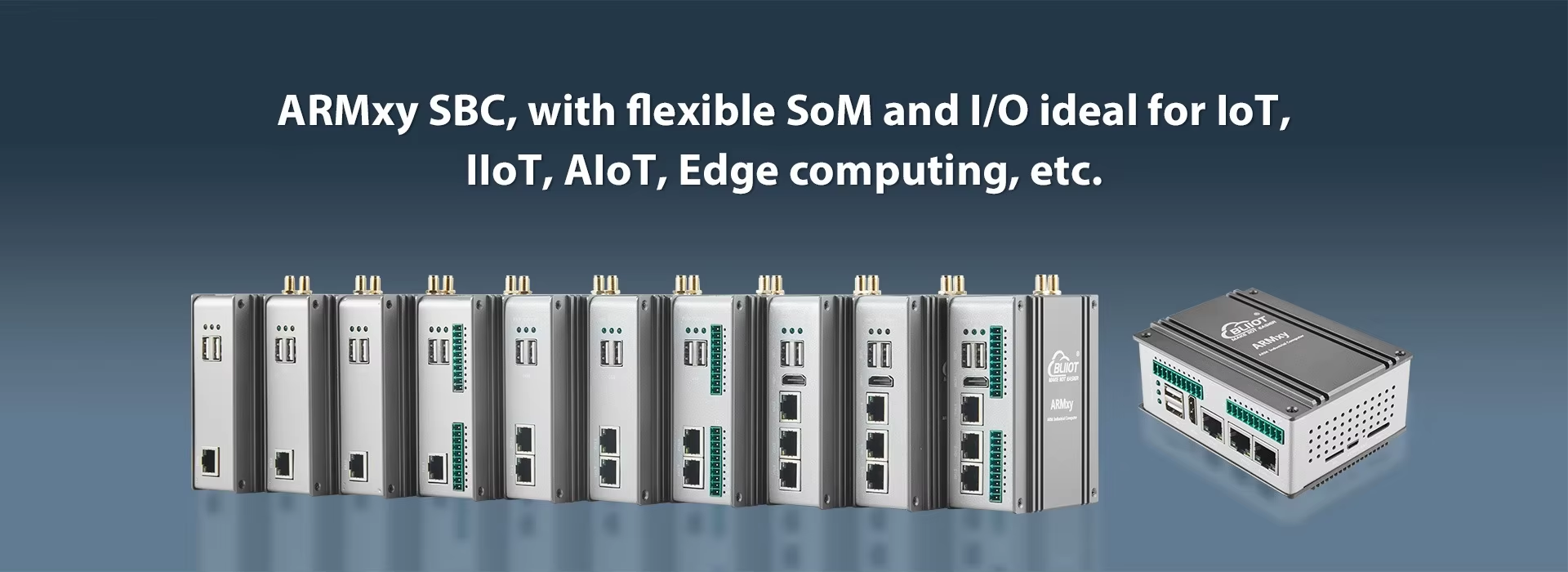
Beilai Tech offers a variety of ARM AI edge controllers, such as the RK3562 BL370 series and RK3568 BL410 series, which support 1Tops NPUs, and the RK3576 BL440 series and RK3588 BL450 series, which support 6Tops NPUs. These controllers offer a variety of RAM and ROM options, and support interfaces such as DI/DO/AI/AO/RTD/TC, making them suitable for diverse industrial environments.


