This solution fully leverages ARMxy's edge capabilities, Node-RED's flexibility, and ThingsBoard's cloud management for efficient and secure industrial IoT deployments.
Case Details
The ARMxy series of industrial-grade gateways (such as BL450, BL335, BL370, etc.) feature rich hardware interfaces (Ethernet, RS485, BLE, LoRa, etc.), a stable Linux-based system, and powerful edge computing capabilities, making them core hardware for the edge side of industrial IoT. Node-RED, as a lightweight visual programming tool, enables rapid implementation of multi-protocol data acquisition, edge data processing, and device linkage. ThingsBoard provides mature IoT cloud management capabilities, including device access, data storage, visualization monitoring, and remote control.
The deep integration of these three components creates an integrated IoT solution with "edge acquisition - local processing - cloud management," suitable for fields such as smart manufacturing, smart water management, intelligent warehousing, and more.
Core Value of the Solution
- Low-Code Rapid Deployment: Node-RED's visual drag-and-drop programming eliminates the need for complex code development, enabling quick completion of sensor data acquisition, protocol conversion, and cloud integration, significantly shortening project deployment cycles (traditional development takes weeks; this solution requires only 1-3 days).
- Edge-Cloud Collaboration: The ARMxy gateway runs Node-RED locally for data preprocessing (filtering, aggregation, cleaning), reducing invalid data uploads and lowering network bandwidth usage; ThingsBoard centrally manages devices, stores data, and issues commands in the cloud, balancing real-time performance and management efficiency.
- Multi-Scenario Adaptability: ARMxy supports multiple interfaces and protocols, compatible with various industrial devices such as Modbus sensors, PLCs, AGVs, and smart meters; Node-RED's rich community nodes (over 2000) allow rapid protocol extension to meet diverse industry needs.
- High Reliability and Security: ARMxy's industrial-grade hardware design (wide temperature range, anti-electromagnetic interference) ensures stable operation in harsh environments; ThingsBoard supports MQTT over TLS encrypted transmission and device authentication; Node-RED can integrate edge-side security checks for end-to-end protection.
Prerequisites
Hardware Environment
- ARMxy Gateway: Recommended BL450 (RK3588 chip, 6TOPS NPU, supports complex edge AI inference) or BL335 (entry-level industrial gateway for lightweight data acquisition scenarios). Ensure the gateway is networked (wired/4G/WiFi).
- Peripheral Devices: Connect sensors (temperature/humidity, vibration, flow, etc.), controllers (PLC, relays), actuators, etc., supporting protocols like Modbus, CAN, BLE, LoRa.
- Network Environment: Ensure connectivity between the gateway and ThingsBoard cloud (public network or intranet penetration) for smooth data transmission.
Software Environment
- ARMxy Gateway: Pre-installed Ubuntu 20.04/Linux system with Node.js (recommended 16.x LTS version) and npm package manager.
- ThingsBoard Platform: Registered account (Community/Professional Edition or private deployment), with target device created and Access Token obtained.
- Node-RED: Installed globally via npm, with extension nodes such as node-red-contrib-thingsboard (ThingsBoard communication node) and node-red-contrib-modbus (Modbus protocol node).
Detailed Implementation Steps
1. Create Project on ThingsBoard Cloud Platform
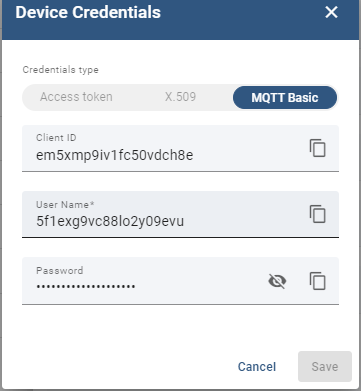
- Record the MQTT Basic authentication information (Access Token).
2. Create Node-RED Flow
- Create a new flow in Node-RED.
3. Upload Telemetry Data
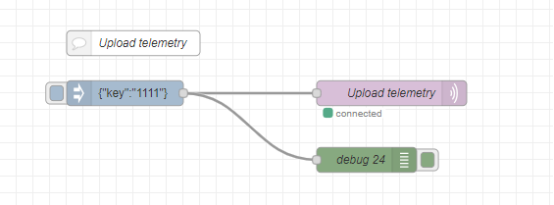
- MQTT out node topic: v1/devices/me/telemetry
- Configure MQTT connection:
-
- Server: demo.thingsboard.io (or custom server)
- Client ID: Custom
-
- Username: Device Access Token
- Password: Leave blank (Basic authentication)
- Configure the data acquisition flow (e.g., read via Modbus and inject telemetry data).
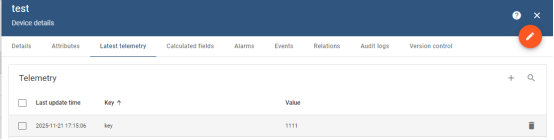
- View uploaded data on ThingsBoard.
4. Upload Attributes
- Use an inject node to inject attribute JSON, for example:
JSON
Inject:
{
  "attribute1": "value1",
  "attribute2": true,
  "attribute3": 42.0,
  "attribute4": 73,
  "attribute5": {
    "someNumber": 42,
    "someArray": [1, 2, 3],
    "someNestedObject": {
      "key": "value"
    }
  }
}
MQTT out node topic:
v1/devices/me/attributes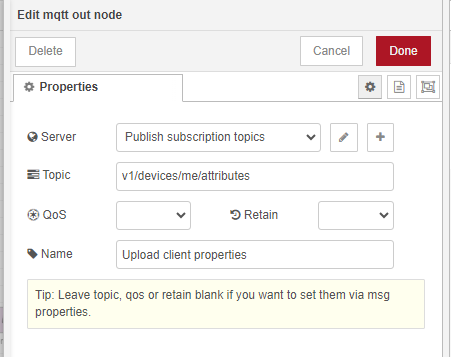
- View latest attributes on ThingsBoard.
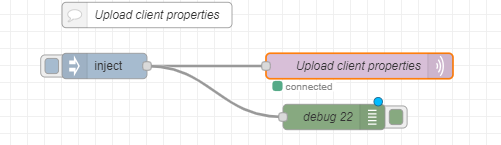
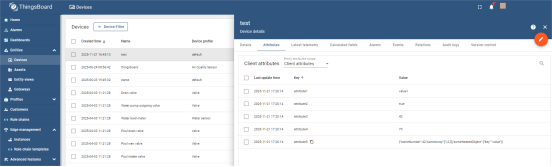
5. Subscribe and Retrieve Server-Side Attributes
- MQTT out publish request topic: v1/devices/me/attributes/request/1
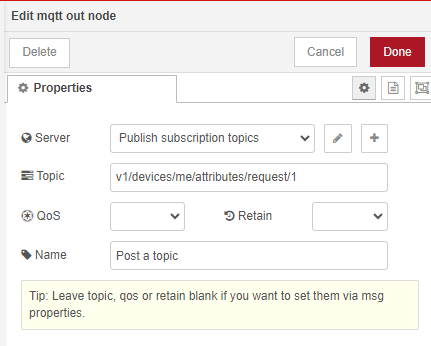
- MQTT Subscription Topic: v1/devices/me/attributes/response/+
Attributes of a Publish Message Request example:
JSON
{
  "clientKeys": "attribute1,attribute2",
  "sharedKeys": "shared1,shared2"
}
- View returned attribute data in the debug window.
6. Server-Side RPC (Remote Procedure Call)
- Create a dashboard on ThingsBoard
- Select a switch on the canvas.
- By triggering the switch and checking the Node-RED debug window, you can see that it has received commands from ThingsBoard.
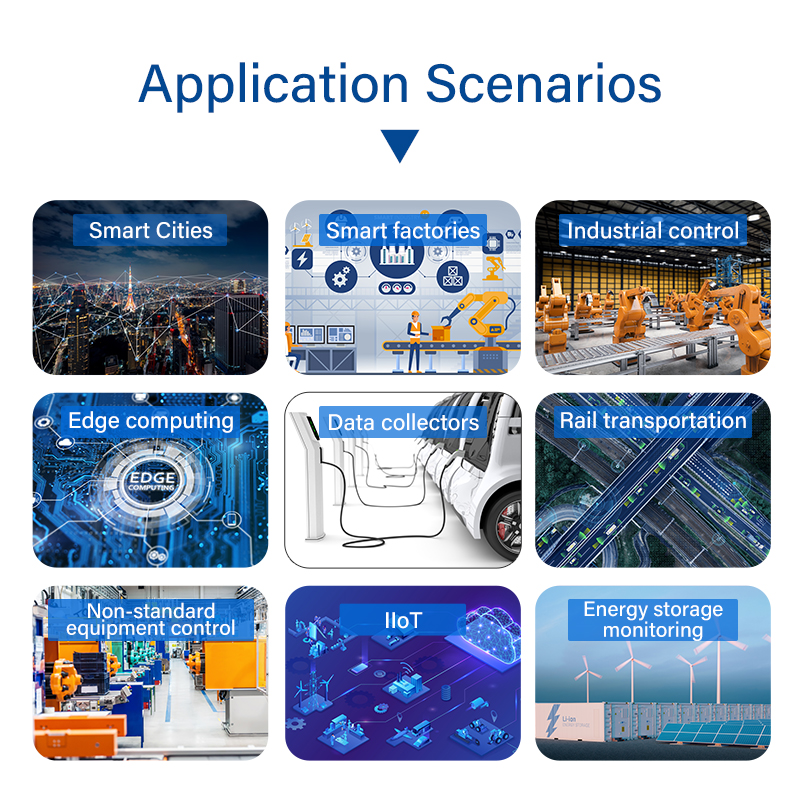
Typical Application Scenarios
1. Intelligent Operation and Maintenance for New Energy Charging Piles (New Energy Sector)
- Pain Points: Widely distributed urban charging piles, low efficiency of traditional manual inspections, equipment failures (e.g., damaged charging modules, network interruptions) leading to charging unavailability, and cumbersome charging data statistics/fee settlement.
- Deployment: One ARMxy BL450 gateway per 10 charging piles, Modbus TCP connection to controllers and smart meters, Ethernet for cameras and alarm lights; 4G module for public network access.
- Core Flow: Edge filtering of data, upload charging volume/duration/fault codes; cloud alerts, work order dispatch, and automated fee reports with time/region analysis.
2. Smart Power Distribution Network Monitoring (Power Sector)
- Pain Points: Dispersed urban distribution lines, incomplete manual inspection coverage, overload/leakage risks causing outages, and delayed loss statistics leading to energy waste.
- Deployment: BL450 gateways at key nodes (transformers, branch boxes), CT/voltage sensors for current/voltage data, 4G Cat M1 for remote areas; infrared cameras for temperature monitoring.
- Core Flow: Edge calculation of power/loss; cloud overload alerts, fault location marking, loss reports, and optimization suggestions.
3. Industrial Wastewater Treatment MBR Membrane Process Control (Environmental Industry)
- Pain Points: Membrane fouling reduces yield, high aeration energy consumption, unstable effluent quality; high replacement costs and difficult fault prediction.
- Deployment: One BL450 gateway in MBR tank area, RS485 for turbidity/DO sensors, Modbus TCP for fans/cleaning pumps, flow sensors for output.
- Core Flow: Edge adjustment of aeration/cleaning based on DO/turbidity; cloud membrane replacement warnings, compliance reports.
4. Industrial Robot Production Line Collaborative Control (Smart Manufacturing)
- Pain Points: Incompatible protocols among robots (ABB, FANUC), motion conflicts, lengthy manual fault diagnosis (avg. 2 hours), high standby energy waste.
- Deployment: One BL450 per production line, Modbus TCP/EtherCAT for robot controllers/force sensors, Ethernet for vision cameras/smart meters.
- Core Flow: Edge motion sequencing via digital twin to avoid conflicts, low-power mode switching; cloud utilization/energy analysis.
5. Intelligent Maintenance for Industrial Dock Belt Conveyors (Port Industry)
- Pain Points: Frequent deviation/tearing/overheating faults on long conveyors, low manual inspection efficiency (4 hours per round), severe losses from interruptions.
- Deployment: Two BL450 gateways per conveyor (head/tail), sensors for deviation/tearing/temperature, Modbus TCP for inverters/correction devices; AI cameras for anomaly detection.
- Core Flow: Edge correction/speed reduction/stop on faults; cloud predictive maintenance reports.
This solution fully leverages ARMxy's edge capabilities, Node-RED's flexibility, and ThingsBoard's cloud management for efficient and secure industrial IoT deployments.


