Smart irrigation systems powered by ARM controllers are driving the transformation of traditional agriculture toward intelligence and precision.
Case Details
In modern agriculture, efficient water resource utilization is closely tied to crop yield and sustainable development. Traditional irrigation methods, reliant on manual experience, often lead to over-irrigation or under-irrigation, wasting water and hindering crop growth. With the rise of smart agriculture, intelligent irrigation systems powered by ARM controllers have emerged as effective solutions, promoting precise, efficient, and sustainable irrigation management.
Core Roles of ARM Controllers in Irrigation Systems
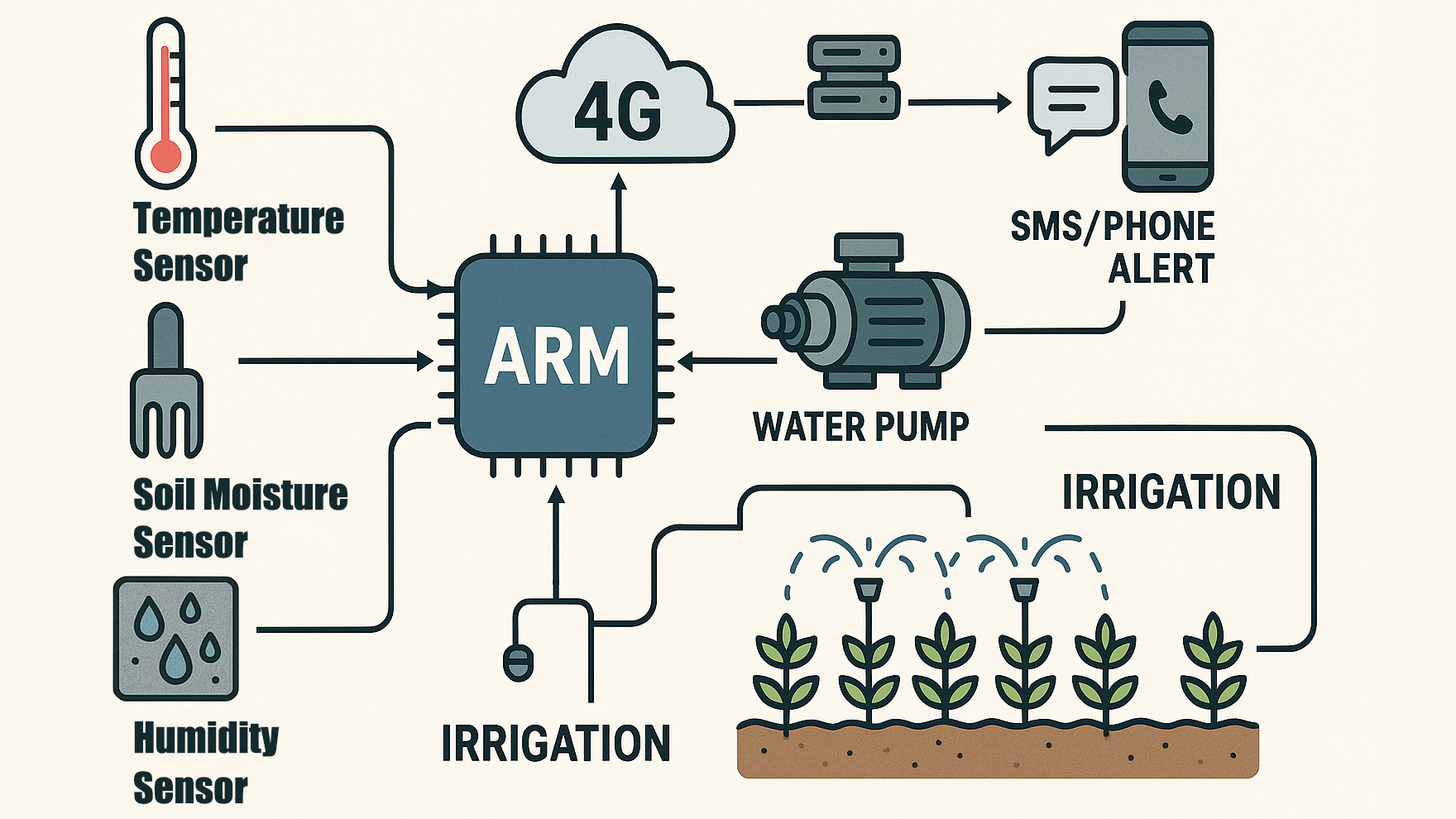
ARM controllers, known for their low power consumption and high performance, are widely used in agricultural IoT applications. Their key functions in smart irrigation systems include:
- Data Acquisition and Edge Computing ARM controllers interface with sensors for soil moisture, air temperature and humidity, light intensity, and flow meters via RS485, 4-20mA protocols. They collect real-time field data and perform local logic processing and data preprocessing, reducing reliance on cloud computing.
- Precise Irrigation Control Based on predefined irrigation strategies, ARM controllers manage the activation and deactivation of solenoid valves and water pumps to execute drip, sprinkler, or micro-irrigation, ensuring precise water delivery.
- Remote Communication and Management Supporting Ethernet, 4G/5G, and Wi-Fi, ARM controllers upload data to cloud platforms, enabling farmers to monitor irrigation status remotely via mobile apps or web interfaces and integrate weather forecasts for automated scheduling.
Application Benefits
- Precision Water Conservation: Real-time monitoring of soil moisture and climate data enables intelligent irrigation timing and volume, saving 30%–50% of water resources.
- Reduced Labor Costs: Remote monitoring and automation minimize the need for manual field inspections and operations.
- Enhanced Crop Yields: Scientific irrigation maintains optimal soil moisture for crop roots, improving yield and quality.
- High Reliability and Low Power Consumption: ARM controllers support solar power, making them ideal for unattended outdoor environments and ensuring long-term system stability.
Typical Application Scenarios
- Field Crops: Zoned intelligent irrigation for crops like wheat, rice, and corn, optimizing water distribution.
- Orchards and Vineyards: Drip irrigation maintains balanced soil moisture, enhancing fruit quality.
- Greenhouses: Integrated water-fertilizer systems provide precise, on-demand irrigation, improving resource efficiency.
- Landscaping and Greenery: Automated irrigation adjusts based on weather and soil moisture, reducing maintenance costs.
Conclusion
Smart irrigation systems powered by ARM controllers are driving the transformation of traditional agriculture toward intelligence and precision. These systems significantly conserve water, reduce costs, and enhance crop yield and quality, providing robust support for sustainable agriculture. Looking ahead, as IoT and AI technologies advance, ARM controllers will play an increasingly vital role in integrated water and fertilizer management in agriculture.


