The ARM embedded controller significantly improves aquaculture efficiency and fish health while reducing operating costs through water quality monitoring, automatic feeding, environmental control and remote management.
Case Details
With the rapid development of the aquaculture industry, automation and intelligent technologies have become increasingly critical in fish farm. ARM controllers, known for their high performance and low power consumption, provide efficient and reliable control systems for fish farms. This article, based on the features of the ARM Embedded Controller BL370 series, explores its application in fish farm automation, covering key areas such as water quality monitoring, feeding management, and environmental control.
ARM Embedded Controller BL370 Series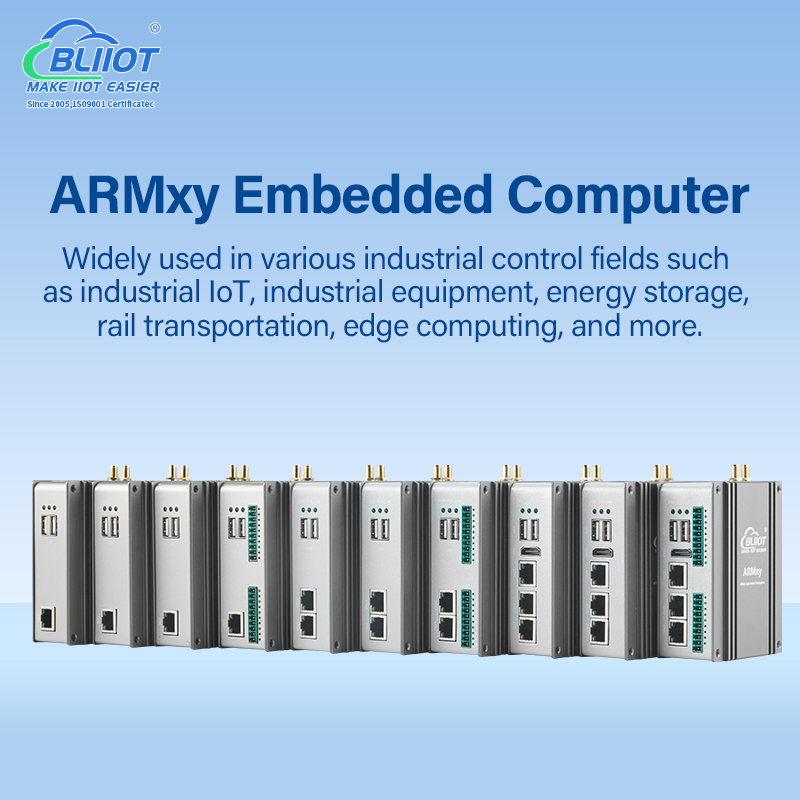
According to the ARM Embedded Controller BL370 datasheet, the BL370 series is an industrial-grade ARM embedded controller powered by a Rockchip processor, offering flexible I/O configurations and robust processing capabilities. Its key features include:
-
Flexible Modular Design: Users can customize ROM, RAM, and I/O configurations by selecting different System-on-Module (SOM) boards and X/Y boards. For example, the BL370-SOM370-X10 configuration includes 1 Ethernet port, 8GB eMMC, 1GB LPDDRX, and 2 RS485 ports, suitable for various industrial applications.
-
Environmental Adaptability: The BL370 series meets Chinese GB/T standards and corresponding IEC standards through low/high-temperature tests, vibration tests, and IP protection tests, ensuring stable operation in harsh industrial environments.
-
Rich Software Support: Pre-installed with BLIOTLink and BLRAT software, it supports the Ubuntu file system and provides development examples for Linux, Node-Red, and Docker, simplifying application development.
-
Communication Capabilities: Supports WiFi and 4G modules, enabling remote monitoring and data transmission.
These features make the BL370 series an ideal choice for fish farming automation.
Fish Farm Control Requirements
Fish farm operations require precise control of multiple environmental parameters to ensure healthy fish growth and efficient production. Key requirements include:
-
Water Quality Monitoring: Real-time monitoring of parameters such as water temperature, pH, dissolved oxygen (DO), and ammonia nitrogen levels.
-
Automated Feeding: Precise control of feeding times and quantities based on fish growth stages and environmental conditions.
-
Environmental Control: Regulation of water pumps, aerators, heaters, or coolers to maintain optimal farming conditions.
-
Remote Monitoring and Management: Cloud-based platforms for remote data access and device control to enhance management efficiency.
-
Data Logging and Analysis: Recording historical data and analyzing it to optimize farming strategies.
Applications of ARM Controller BL370 in Fish Farm
Water Quality Monitoring System
The BL370 controller’s flexible I/O interfaces can connect to various sensors for real-time water quality monitoring. For instance, pH, dissolved oxygen, and temperature sensors can be connected via RS485 interfaces, allowing the controller to collect data and process it using the pre-installed BLIOTLink software. Data can be uploaded to a cloud platform via Ethernet or 4G for remote access by farm managers.
Implementation:
-
Use the BL370-SOM370-X10 configuration to connect multiple sensors.
-
Develop data collection and processing workflows using Node-Red to generate real-time water quality reports.
-
Trigger alerts via MQTT protocol when water quality parameters exceed safe ranges, notifying farm managers.
Automated Feeding System
Feeding is a critical aspect of fish farming, as overfeeding or underfeeding can impact fish growth and water quality. The BL370 controller can control automatic feeding machines through digital output interfaces, adjusting feed quantities and schedules based on preset timetables or sensor data (e.g., water temperature, fish activity levels).
Implementation:
-
Configure the BL370’s I/O board to connect to feeder drive modules.
-
Develop feeding control programs using Linux or RT-Thread, integrating sensor data to dynamically adjust feeding strategies.
-
Upload feeding records to the cloud via BLIOTLink software for further analysis.
Environmental Control System
Fish are highly sensitive to changes in water temperature and oxygen levels. The BL370 controller can regulate water pumps, aerators, and heating/cooling devices through analog and digital outputs to maintain stable farming conditions. For example, it can activate an aerator when dissolved oxygen levels fall below a set threshold.
Implementation:
-
Connect water pumps and aerator relays to the BL370’s I/O interfaces.
-
Run environmental control algorithms using Docker containers for rapid response.
-
Enable remote device control via BLRAT software, allowing managers to operate equipment from smartphones or computers.
Remote Monitoring and Cloud Platform Integration
The BL370 supports WiFi and 4G modules, enabling real-time data uploads to cloud platforms. Through the BLIOTLink industrial protocol, the controller can seamlessly integrate with mainstream cloud platforms (e.g., AWS IoT, Alibaba Cloud). Managers can access real-time data, historical records, and device statuses via smartphones or computers.
Implementation:
-
Configure a 4G module (e.g., BL370L-SOM370-X10) for remote data transmission.
-
Run MQTT communication programs using Docker containers to push data to the cloud.
-
Develop Node-Red-based dashboards to display water quality, feeding, and environmental control data.
Data Logging and Analysis
The BL370 supports the Ubuntu file system and provides extensive development examples, making it suitable for data logging and analysis applications. Fish farms can use the controller to record long-term data, analyze trends in water quality, feeding efficiency, and fish growth, and optimize farming strategies.
Implementation:
-
Develop data storage programs using the Linux system, saving sensor data to eMMC storage.
-
Create user interfaces with QT to display data analysis results.
-
Perform big data analysis via cloud platforms to predict optimal feeding times and environmental parameters.
Advantages and Benefits
Implementing fish farm control solutions with the ARM Embedded Controller BL370 series offers the following advantages:
-
High Reliability: Proven through environmental adaptability tests, the BL370 operates stably in humid and high-temperature farm environments.
-
Flexibility: Modular design supports customized configurations to meet the needs of farms of varying scales.
-
Ease of Development: Rich development resources and example code reduce development complexity and deployment time.
-
Cost-Effectiveness: Integrated hardware and software solutions minimize the need for additional equipment, lowering overall costs.
-
Intelligent Management: Remote monitoring and data analysis capabilities enhance farming efficiency and reduce manual intervention.
Conclusion
The ARM Embedded Controller BL370 series, with its high performance, flexibility, and robust software support, provides a comprehensive automation solution for fish farming. By enabling water quality monitoring, automated feeding, environmental control, and remote management, this controller significantly improves farming efficiency and fish health while reducing operational costs. As IoT and AI technologies continue to advance, the BL370 series is poised to play an even greater role in smart aquaculture.


