Choosing the ARMxy series of embedded controllers, paired with flexible and selectable I/O modules, allows you to save costs by eliminating the need for customization and enabling flexible and rapid development of different projects.
In industrial projects, the most challenging part is often not the initial solution design, but what happens when requirements change halfway through implementation. The real difference between solutions lies in how well they handle these mid-project changes.
The birth of the Y95 / Y96 high-speed pulse modules is a very typical—and very real—example of this.
A Completely Standard ARM-Based Industrial Project
At the beginning, the customer’s requirements were very clear:
-
An ARM-based industrial control solution
-
A certain level of IO capability
-
High stability with long-term availability
-
Used for on-site control and data acquisition
At this stage, the ARMxy series fully met all requirements.
In terms of computing power, interface flexibility, and system stability, there were no weaknesses at all. The solution was finalized quickly, and the project moved forward smoothly.
ARMxy Controller Portfolio Overview

| Model |
Core SoC |
Architecture / Frequency |
| BL310 |
NXP i.MX6ULL |
Cortex-A7 single-core ~800 MHz |
| BL330 / BL335 |
Allwinner T113-i |
Cortex-A7 dual-core ~1.2 GHz |
| BL340 |
Allwinner T507-H |
Cortex-A53 quad-core ~1.4 GHz |
| BL350 |
TI AM6232 / AM6254 |
Cortex-A53 + M4F |
| BL360 |
NXP i.MX8M Mini |
Cortex-A53 quad-core + M4 |
| BL370 |
Rockchip RK3562 |
Cortex-A53 quad-core ~2.0 GHz |
| BL410 |
Rockchip RK3568 |
Cortex-A55 quad-core ~1.8–2.0 GHz |
| BL440 |
Rockchip RK3576 |
Cortex-A72×4 + A53×4 |
| BL450 |
Rockchip RK3588 |
Cortex-A76×4 + A55×4 |
| BL460 |
Broadcom CM5 |
Cortex-A76 quad-core ~2.4 GHz |
Requirements Changed Mid-Project
As the on-site solution evolved, a new requirement emerged:
High-speed pulse counting was needed to collect pulse signals from field devices.
This was not a symbolic feature—it came with clear expectations:
-
4 pulse counting channels
-
High frequency and stable performance
-
Designed for long-term industrial operation
This immediately raised a problem: high-speed pulse counting was not part of the standard IO configuration.
The “Traditional” Path: Full Controller Customization
Based on traditional project experience, once a requirement involves:
The usual conclusion is straightforward: customize an entirely new ARM controller.
This typically means:
-
Complete hardware redesign
-
Software re-adaptation
-
Longer development cycles
-
Significantly higher costs
-
Increased project risk
But the customer’s real question was:
“It’s just one additional function—do we really need to redesign the entire platform?”
ARMxy Offers a Different Way of Thinking
When this requirement was re-evaluated within the ARMxy architecture, the direction changed completely.
ARMxy was never designed as a fixed-function controller. Instead, it is:
A modular and highly extensible industrial control platform.
Its core design philosophy is simple and clear:
-
The main controller focuses on computing and system control
-
IO functions are modularized
-
Capabilities are combined through X boards and Y boards
-
If functionality is missing, extend a module—not the entire controller
The Final Solution: Customizing Only One High-Speed Pulse Y Board
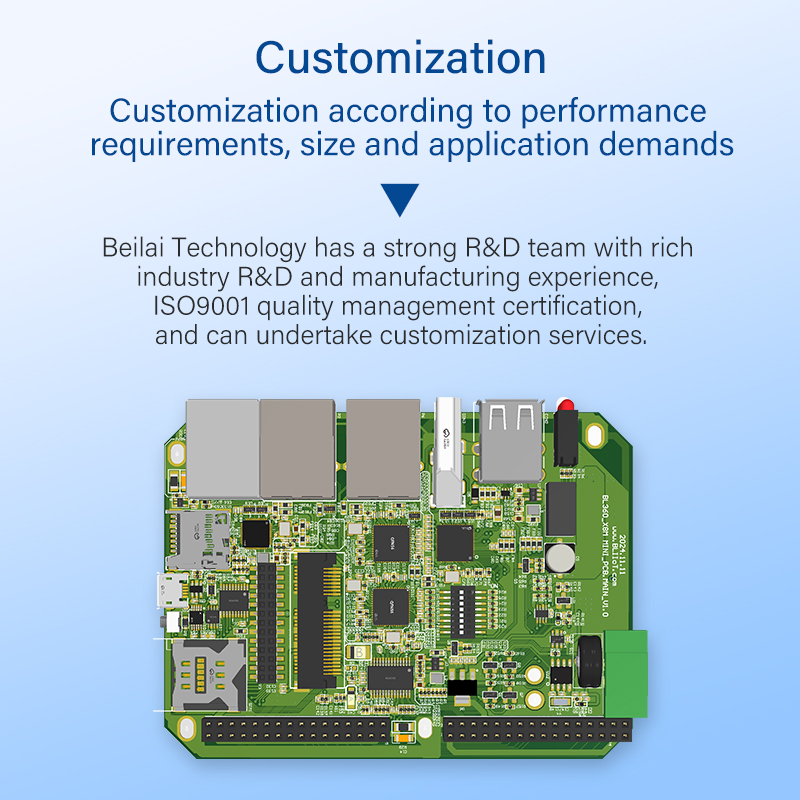
The final solution was minimal, precise, and highly effective:
-
The ARMxy main controller remained unchanged
-
The original system architecture was fully preserved
-
A high-speed pulse Y board (Y96) was added
-
4 pulse counting channels were implemented (1 high-speed + 3 low-speed)
No controller redesign. No system overhaul.
Just one additional Y board.
Yet the results were decisive
-
All functional requirements were met
-
System architecture remained clean and clear
-
Project risk was reduced to a minimum
Why Is a Single Y Board Enough?
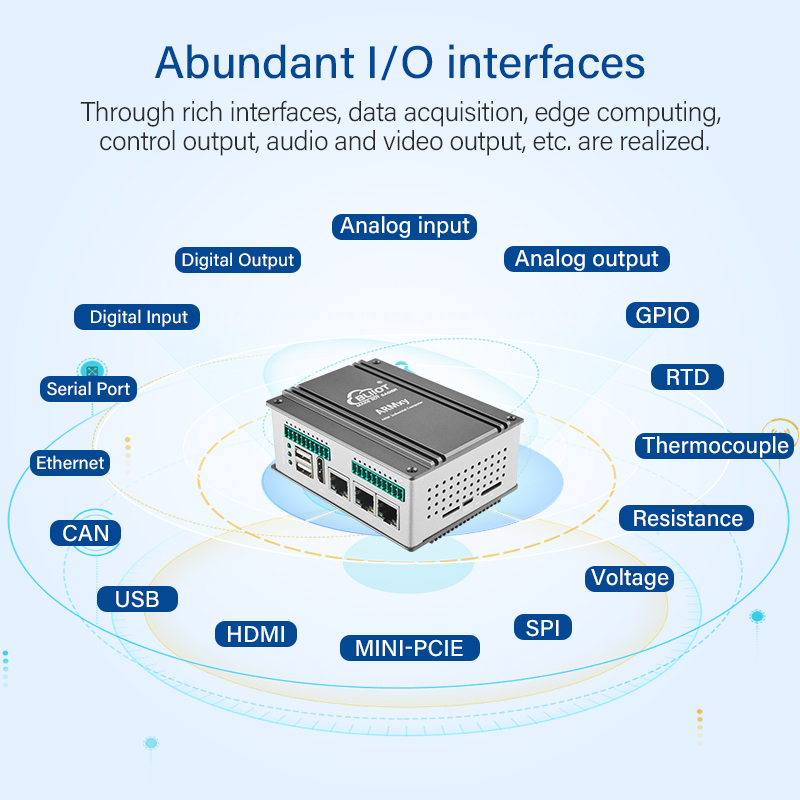
This is where the true strength of the ARMxy architecture becomes evident.
ARMxy Modular Logic
-
X Boards: Communication and basic IO
(RS232/RS485, CAN, DI, DO, GPIO)
-
Y Boards: Field interfaces and function-specific IO
(AI, AO, RTD, TC, PWM, pulse counting, etc.)
The rule is simple:
High-speed pulse counting is a classic example of a function-specific extension, with no reason to affect the entire controller platform.
Custom Y Board vs. Full Controller Customization
| Comparison Item |
Full Controller Customization |
Single Y Board Customization |
| Scope of change |
Entire controller |
Single function module |
| Software impact |
High |
Minimal |
| Development cycle |
Long |
Significantly shorter |
| Cost |
High |
Much lower |
| Project risk |
High |
Controlled |
| Future expansion |
Poor |
Highly scalable |
In short:
Keep heavy changes light, and light changes minimal.
The Flexibility Industrial Projects Truly Need
What impressed the customer most was not the pulse counting itself, but the fact that:
The ARMxy architecture allows projects to grow without being rebuilt.
-
The initial solution works from day one
-
New functions can be added later without starting over
-
When capacity is insufficient, simply add another Y board
-
Cost, schedule, and risk remain under control
This is the real meaning behind ARMxy’s philosophy:
“Configure exactly what you need.”
When a platform is modular and composable enough:
Customization is no longer a high-risk engineering task, but a simple, controlled, and cost-effective process.
That is the value ARMxy aims to deliver to industrial projects.


