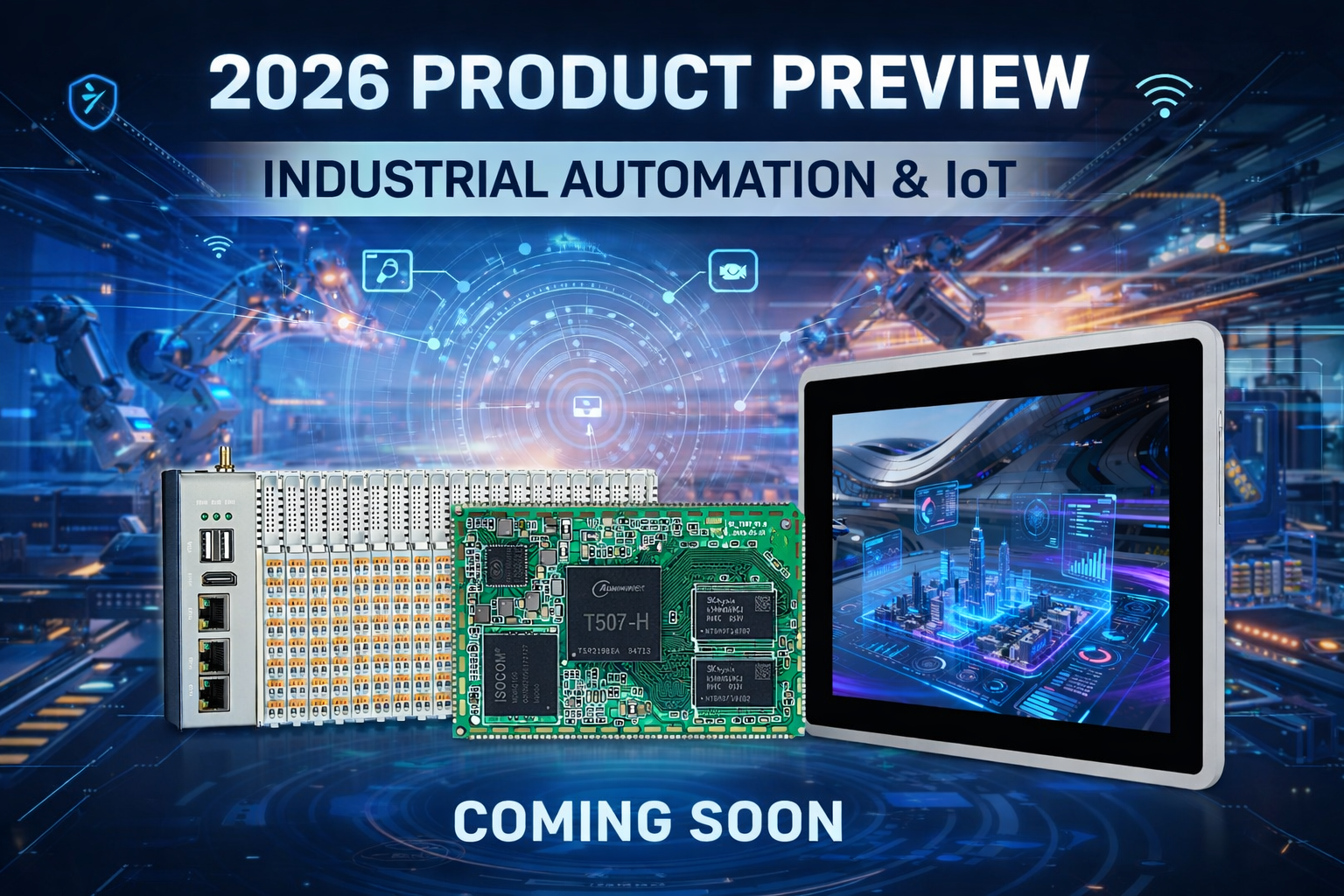
CES 2026 marks the transition of industrial automation into an “AI-ready” era, where Physical AI moves from concept to real-world deployment. As the core driver of the next industrial revolution, Physical AI is making manufacturing smarter, more resilient, and more sustainable, with many technologies expected to reach pilot or production stages in 2026.
CES 2026 (January 6–9, 2026, Las Vegas) placed Physical AI at the center of its theme, signaling a major shift as artificial intelligence moves beyond digital interfaces into the physical world. Industrial automation, robotics, the Internet of Things (IoT), and edge computing took center stage, showcasing how AI is driving the next industrial revolution and accelerating the digital transformation of manufacturing.
Key Trends
Physical AI and Industrial Robotics Take the Lead
Humanoid robots, industrial robots, and autonomous systems dominated the show floor, with a strong focus on practical deployment rather than demonstrations. Powered by AI, robots are increasingly capable of performing repetitive and high-risk tasks in factories, construction sites, and logistics environments—significantly improving efficiency, safety, and productivity.
Convergence of AI and Digital Twins
Digital twin technologies are being widely adopted to simulate factory upgrades, enable predictive maintenance, and optimize supply chains. This convergence is accelerating the transition toward software-defined factories.
Edge AI and IoT Advancement
Next-generation processors designed for robotics, smart cities, and industrial automation emphasize low power consumption, real-time decision-making, and massive IoT connectivity, enabling intelligence closer to the field level.
Manufacturing Transformation Accelerates
Dedicated advanced manufacturing zones and industry tracks at CES 2026 highlighted automation technologies, industrial software, and AI systems, reflecting the rapid shift toward intelligent and digital manufacturing worldwide.
Major Announcements and Highlights
Siemens and NVIDIA: AI-Driven Industrial Operating Systems
Siemens CEO Roland Busch and NVIDIA CEO Jensen Huang announced an expanded partnership, introducing AI-powered industrial operating systems, including Digital Twin Composer for large-scale industrial metaverse simulations. These technologies target manufacturing, production, and supply chain transformation, while also exploring industrial AI wearables such as Meta Ray-Ban glasses.
NVIDIA Advances Physical AI
NVIDIA unveiled the Rubin platform alongside open models such as Cosmos (robot simulation) and GR00T (embodied intelligence), reinforcing its vision of large-scale deployment through the concept of a “robot gigafactory.”
Boston Dynamics, Hyundai, and Google DeepMind
The production-ready Atlas humanoid robot made its debut, leveraging Google DeepMind’s Gemini models to perform industrial tasks. Large-scale deployment is planned to begin in the automotive sector, with Hyundai targeting factory adoption by 2028.
Intel Core Ultra Series 3 for Industrial Edge
Intel introduced industrial-grade Core Ultra processors for embedded and edge applications, delivering extended temperature support, deterministic performance, and 24/7 reliability for robotics, smart cities, and automation systems.
Qualcomm Robotics Platforms
Qualcomm launched the Dragonwing IQ10 series, enabling Physical AI deployment across autonomous mobile robots and humanoid robots, supported by a broad partner ecosystem.
Robotics, Automation, and IoT Ecosystem
From heavy equipment automation by Caterpillar, John Deere, and Doosan, to quadruped robots for industrial inspection and hazardous environment monitoring, CES 2026 highlighted the growing maturity of autonomous systems.
In IoT, North Hall focused on smart communities and AI-enabled connectivity, with new networking concepts improving coverage and latency. The Matter standard continued to expand, supporting both smart home and industrial connectivity.
Conclusion
CES 2026 marks the transition of industrial automation into an “AI-ready” era, where Physical AI moves from concept to real-world deployment. As the core driver of the next industrial revolution, Physical AI is making manufacturing smarter, more resilient, and more sustainable, with many technologies expected to reach pilot or production stages in 2026.
In line with this trend, Shenzhen Beilai Technology Co., Ltd. also places AI at the center of its strategy and plans to launch multiple AI-powered edge controllers, empowering industrial automation and accelerating the next wave of industrial innovation.