NXP's i.MX 8M Mini and T507-H are both ARM-based processors targeting different application scenarios. While they both feature a quad-core Cortex-A53 architecture, they differ significantly in performance, functionality, peripheral support, and application areas. Selection Recommendations:
Choose i.MX 8M Mini if you need low power consumption, Industrial Control, multimedia processing.
Choose T507-H if you need high-performance AI, automotive applications, or industrial IoT.
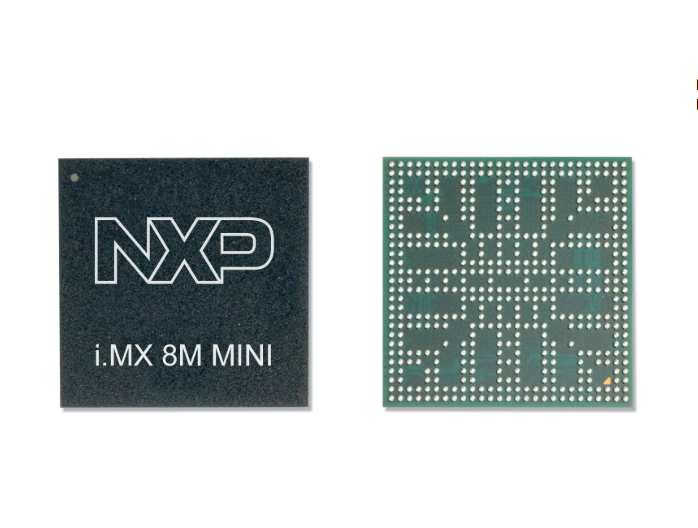
Comparison Between NXP's i.MX 8M Mini Quad-Core A53 Chip and T507-H
NXP's i.MX 8M Mini and T507-H are both ARM-based processors targeting different application scenarios. While they both feature a quad-core Cortex-A53 architecture, they differ significantly in performance, functionality, peripheral support, and application areas. Below is a detailed comparison of the two:
1. Core Architecture and Performance
-
i.MX 8M Mini:
-
CPU: Quad-core ARM Cortex-A53, up to 1.8 GHz.
-
GPU: Integrated Vivante GC320 2D GPU and GC7000Lite 3D GPU, supporting OpenGL ES 3.1, Vulkan 1.1, and other graphics APIs.
-
NPU: No dedicated NPU, but AI acceleration can be achieved through the GPU and DSP.
-
DSP: Integrated Cortex-M4 co-processor for real-time control and low-power tasks.
-
Target Markets: Consumer electronics, smart home, industrial control, multimedia processing.
-
T507-H:
-
CPU: Quad-core ARM Cortex-A53, up to 1.5 GHz.
-
GPU: Integrated Mali-G52 MP2 GPU, supporting OpenGL ES 3.2, Vulkan 1.1, and other graphics APIs.
-
NPU: Integrated dedicated NPU (Neural Processing Unit) with 0.5 TOPS AI performance.
-
DSP: No dedicated DSP, but the NPU and GPU can collaborate on AI tasks.
-
Target Markets: Autonomous driving, in-vehicle infotainment (IVI), industrial IoT, edge computing.
2. Multimedia and Display Support
-
i.MX 8M Mini:
-
Video Decoding: Supports 4K@30fps H.265/H.264 video decoding.
-
Video Encoding: Supports 1080P@60fps H.264 video encoding.
-
Display Output: Supports dual-screen display, up to 1080P@60fps HDMI output.
-
Audio Processing: Integrated high-performance audio DSP, supporting multi-channel audio input/output.
-
T507-H:
-
Video Decoding: Supports 4K@60fps H.265/H.264 video decoding.
-
Video Encoding: Supports 1080P@60fps H.264 video encoding.
-
Display Output: Supports dual-screen display, up to 4K@60fps HDMI output.
-
Audio Processing: Integrated high-performance audio interfaces, supporting multi-channel audio input/output.
3. AI and Machine Learning
-
i.MX 8M Mini:
-
No dedicated NPU; AI tasks rely on the GPU and Cortex-M4 co-processor, suitable for lightweight AI applications.
-
Supports AI frameworks like TensorFlow Lite and Caffe, but with limited performance.
-
T507-H:
-
Integrated dedicated NPU with 0.5 TOPS AI performance, suitable for medium-complexity AI inference tasks.
-
Supports AI frameworks like TensorFlow Lite, Caffe, and ONNX, with significantly better AI performance than the i.MX 8M Mini.
4. Peripherals and Interfaces
-
i.MX 8M Mini:
-
Storage Interfaces: Supports LPDDR4, eMMC 5.1, SD 3.0.
-
Networking Interfaces: Supports Gigabit Ethernet, Wi-Fi, Bluetooth.
-
Other Interfaces: USB 3.0, PCIe 2.0, MIPI-CSI/DSI, I2C, SPI, UART, etc.
-
Expandability: Suitable for medium-complexity embedded systems.
-
T507-H:
-
Storage Interfaces: Supports LPDDR4, eMMC 5.1, SD 3.0.
-
Networking Interfaces: Supports Gigabit Ethernet, Wi-Fi, Bluetooth, CAN bus.
-
Other Interfaces: USB 3.0, PCIe 3.0, MIPI-CSI/DSI, I2C, SPI, UART, etc.
-
Expandability: More suitable for high-complexity systems, especially in automotive and industrial IoT applications.
5. Power Consumption and Thermal Management
-
i.MX 8M Mini:
-
Lower power consumption, suitable for power-sensitive applications.
-
Moderate thermal requirements, suitable for compact devices.
-
T507-H:
-
Slightly higher power consumption due to the integrated NPU and more powerful GPU, suitable for high-performance scenarios.
-
Higher thermal requirements, especially under heavy workloads.
6. Application Areas
-
i.MX 8M Mini:
-
Consumer electronics (smart speakers, smart home devices).
-
Industrial control (HMI, PLC).
-
Multimedia processing (video players, digital signage).
-
T507-H:
-
Autonomous driving (in-vehicle infotainment systems, ADAS).
-
Industrial IoT (edge computing, smart gateways).
-
High-performance multimedia processing (4K video playback, AI vision).
7. Development Support and Ecosystem
-
i.MX 8M Mini:
-
Supports Yocto Linux and Ubuntu, Debian operating systems.
-
Provides rich development tools and documentation, suitable for rapid prototyping.
-
T507-H:
-
Supports Yocto Linux, Android, and Ubuntu operating systems.
-
Provides specialized development tools and SDKs for automotive and industrial applications.
Summary Comparison Table:
| Feature |
i.MX 8M Mini |
T507-H |
| CPU |
Quad-core Cortex-A53 (up to 1.8 GHz) |
Quad-core Cortex-A53 (up to 1.5 GHz) |
| GPU |
Vivante GC320 + GC7000Lite |
Mali-G52 MP2 |
| Video Decoding |
4K@30fps H.265/H.264 |
4K@60fps H.265/H.264 |
| Video Encoding |
1080P@60fps H.264 |
1080P@60fps H.264 |
| Display Output |
Dual-screen, up to 1080P@60fps |
Dual-screen, up to 4K@60fps |
| Target Markets |
Consumer electronics, industrial control, multimedia |
Autonomous driving, industrial IoT, edge computing |
| Power Consumption |
Lower |
Higher |
| Typical Applications |
Smart speakers, HMI, digital signage |
In-vehicle infotainment, ADAS, smart gateways |
Selection Recommendations:
-
Choose i.MX 8M Mini if you need low power consumption, Industrial Control, multimedia processing.
-
Choose T507-H if you need high-performance AI, automotive applications, or industrial IoT.
I hope this comparison helps you choose the right processor for your needs! If you have further questions, feel free to ask.


